
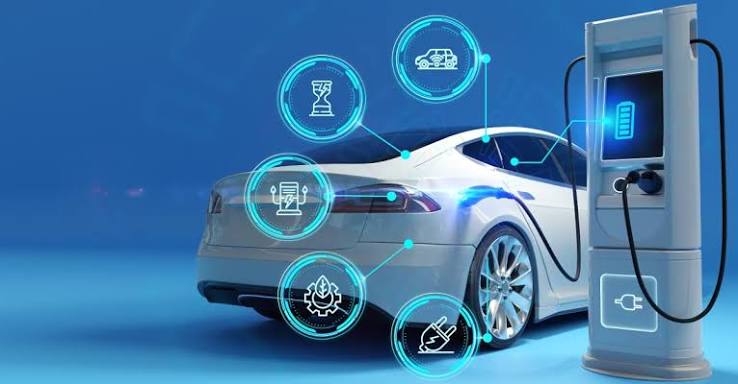
How Electric Vehicle Technology Differs From Internal Combustion
The electric vehicle powertrain’s fundamental difference from the internal combustion engine is not just the absence of petrol — it is the substitution of a mechanically simple, precisely controllable electric motor system for the mechanically complex, less controllable combustion engine system. The ICE vehicle has hundreds of moving parts in the engine alone; the EV’s electric motor has one primary moving part (the rotor). The ICE vehicle requires a multi-speed transmission to match engine RPM to driving conditions because the engine’s power curve is narrow; the EV’s electric motor produces maximum torque from zero RPM and across a wide RPM range, eliminating the transmission or reducing it to a single-speed unit. The ICE vehicle requires a complex exhaust and emissions management system; the EV has none.
The EV technology component whose performance most directly determines the vehicle’s range, charging speed, and longevity: the battery pack. The lithium-ion battery chemistry, the cell format (cylindrical, prismatic, or pouch cells), the thermal management system (how the battery is heated and cooled to maintain optimal temperature), and the battery management system (the software that monitors cell voltages, manages charging rates, and protects cells from damage) together determine whether the battery achieves its theoretical energy capacity in practice, how quickly it can be charged without damaging the cells, and how much capacity it retains over years of use.
Charging Infrastructure and Range Anxiety
The EV adoption obstacle that most frequently appears in consumer surveys as a top barrier: range anxiety — the concern about running out of charge without access to a charging station. The actual range anxiety experience of EV owners who have adopted the vehicles is typically much less than the concern of non-owners who are considering adoption — the majority of EV owners charge at home overnight and start each day with a full battery, and the expanding fast-charging network makes the range of scenarios where charging is genuinely inconvenient increasingly limited. The person who drives less than 250 miles per day (the large majority of drivers) and has a home charging option has a practical EV experience that range anxiety fears underestimate.
The EV charging network development that most significantly changes the competitive landscape: Tesla’s decision to open its Supercharger network to non-Tesla EVs, which began in the US in 2023 and has expanded significantly since. The Supercharger network is the most extensive and most reliable fast-charging network in the US and Europe, and Tesla’s willingness to open it to other brands (with adapters and software updates) has made EVs from non-Tesla manufacturers significantly more practical for long-distance travel. Most major US automakers have adopted the NACS connector standard that Tesla’s network uses, making future non-Tesla EVs directly compatible with the Supercharger network without adapters.
Software-Defined Vehicles and Over-the-Air Updates
The EV technology innovation that most clearly illustrates the conceptual difference between EVs and conventional vehicles: the over-the-air (OTA) software update that adds or improves vehicle capabilities without a dealer visit. Tesla pioneered the OTA update model for vehicles and has used it to add features (Autopilot improvements, new driving modes, entertainment features), fix bugs (improved handling dynamics, battery management optimisations), and occasionally remove features (most controversially, reducing the range and charging speed of used Tesla vehicles whose previous owners had purchased premium software features). The OTA capability transforms the vehicle from a static product into a software platform that can improve over its lifetime.
The OTA update capability that most affects the long-term value proposition of EVs: the improvement in efficiency and range over time. The battery management optimisations and energy recovery algorithms that improve with each software update mean that an EV purchased today may achieve slightly better real-world range in two years than it achieves today — the inverse of the degradation that battery aging produces. The net effect depends on the magnitude of the software improvement relative to the battery degradation, but the trajectory is different from the conventional vehicle, which never improves through software updates and only degrades mechanically over time.
Autonomous Driving Technology: Progress and Reality
The autonomous driving technology landscape that most accurately reflects the current state of the field: the full self-driving (FSD) capability that Tesla markets, the Super Cruise that General Motors offers, the BlueCruise from Ford, and the ProPilot from Nissan and Infiniti are all Level 2 driver assistance systems that handle steering, acceleration, and braking under defined conditions but require the driver to maintain attention and be ready to take over. No production vehicle currently sold in any market provides Level 3 or higher autonomy (where the driver can disengage from the driving task) as a standard feature, despite years of marketing suggesting that full autonomy was imminent.
The autonomous driving technology progress that has produced the most genuinely autonomous vehicles in public use: the robotaxi services operated by Waymo and other autonomous vehicle companies in defined geographic areas with limited operational design domains. Waymo’s commercial robotaxi service operating in Phoenix, San Francisco, and Los Angeles provides autonomous rides without a safety driver in the vehicle — a genuinely Level 4 autonomous operation in defined areas. The geographic and operational constraints of these services illustrate both the genuine capability that has been achieved and the distance between that capability and the general-purpose self-driving capability that early autonomous driving timelines projected would be available by this point in time.
The EV Adoption Trajectory and What It Means for Drivers
The EV adoption curve that most accurately reflects where the technology is in the diffusion cycle: the transition from early adopter to early majority adoption in many markets, with EV market share in new vehicle sales exceeding 20% in Norway, China, and several European markets, and approaching 10% in the US market. The models that have historically described technology adoption suggest that this is the stage where the improvement in supporting infrastructure (charging network density), the reduction in price premium relative to conventional vehicles, and the expanding model variety across vehicle categories will accelerate adoption toward the mainstream.
The EV technology consideration that most affects the total cost of ownership calculation that drives most vehicle purchasing decisions: the lower fuel and maintenance costs that offset the higher purchase price for most EV buyers who drive adequate annual mileage. The EV without a combustion engine, transmission, or exhaust system has significantly fewer mechanical components to service — no oil changes, no transmission fluid, no exhaust system maintenance, reduced brake wear from regenerative braking. The fuel cost comparison depends on local electricity and petrol prices, but in most markets, the electricity cost per mile is substantially lower than the petrol cost per equivalent mile. The combination of lower fuel and maintenance costs produces a total cost of ownership that is competitive with or superior to comparable conventional vehicles for buyers who drive above a threshold annual mileage.