
How Quantum Computing Differs From Classical Computing
Classical computers store and process information in bits — discrete units that can be either 0 or 1. Every calculation a classical computer performs is a sequence of operations on bits, and the speed of computation is determined by how quickly the processor can execute these operations and how many it can execute in parallel. Quantum computers store information in qubits — quantum bits that exploit quantum mechanical phenomena (superposition and entanglement) to represent and process information in ways that have no classical analogue. The qubit in superposition exists in a combination of 0 and 1 simultaneously until it is measured, and entangled qubits exhibit correlations that allow operations on one qubit to influence the state of entangled qubits instantaneously regardless of physical separation.
The quantum computing advantage that these properties enable: for specific problem types, the quantum computation can explore many possible solutions simultaneously rather than sequentially, potentially reaching the correct answer exponentially faster than the best known classical algorithms. The word potentially is important — quantum advantage is not universal. For many problem types, classical computers remain faster; quantum advantage applies specifically to problems whose structure allows quantum algorithms to exploit superposition and interference to amplify the probability of measuring the correct answer and suppress the probability of measuring incorrect ones.
The Problems Quantum Computing Can and Cannot Solve
The problem categories for which quantum algorithms have demonstrated theoretical exponential speedup over the best known classical algorithms: integer factorisation (Shor’s algorithm can factor large integers exponentially faster than any known classical algorithm — the capability that would, if implemented at sufficient scale, break the RSA and elliptic curve cryptography that secures most current internet communications), unstructured database search (Grover’s algorithm provides a quadratic speedup over classical search for unstructured databases), and simulation of quantum physical and chemical systems (where the quantum computer’s natural representation of quantum states provides direct simulation capability that classical simulation requires exponential resources to approximate).
The problem category where quantum computing’s advantage is most frequently overstated: optimisation and machine learning. The narrative that quantum computers will revolutionise machine learning and produce transformative AI capabilities is not well-supported by the current state of quantum algorithms. The quantum speedup available for most machine learning and optimisation tasks (where the best quantum algorithms provide polynomial rather than exponential speedup, and often only under specific conditions) is less dramatic than the speedup available for the specific mathematical problems where quantum algorithms truly excel.
The Hardware Challenge: Building Usable Qubits
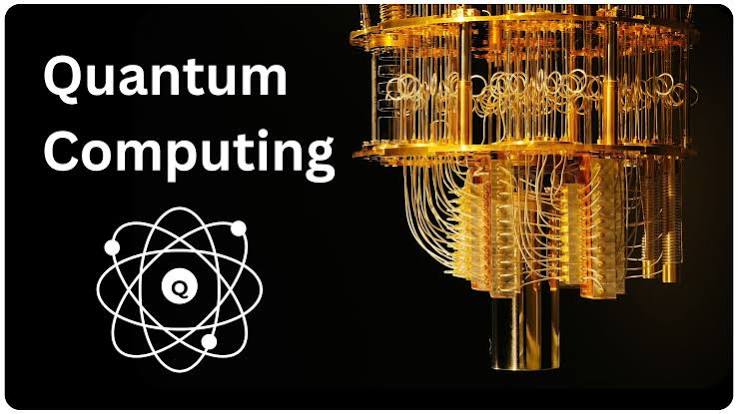
The fundamental engineering challenge that has prevented quantum computing from achieving practical advantage on real problems: quantum coherence. Qubits must maintain their quantum state (superposition and entanglement) throughout a computation for the computation to produce the correct result. In practice, qubits interact with their environment and lose their quantum state (decohere) extremely quickly — modern superconducting qubits maintain coherence for microseconds to milliseconds. Building quantum circuits that complete useful computations within the coherence time, while controlling the physical interactions required to perform gate operations and reading the results, requires extraordinary precision at physical scales and temperatures that challenge the limits of current engineering.
The quantum error correction approach that most addresses the decoherence challenge: the redundant encoding of logical qubits in multiple physical qubits, which allows errors on individual physical qubits to be detected and corrected without disturbing the logical quantum state. The fault-tolerant quantum computer that implements quantum error correction could in principle run arbitrarily long computations, but the overhead of error correction is substantial — current estimates suggest that a single logical qubit may require hundreds to thousands of physical qubits for effective error correction. The quantum processor that today has one thousand physical qubits may implement only a handful of logical qubits when error correction overhead is included.
The Current Quantum Landscape
The quantum computing hardware and software ecosystem that has emerged from significant investment over the past decade: IBM, Google, Microsoft, IonQ, Quantinuum, and Rigetti among the quantum hardware developers, each pursuing different physical implementations (superconducting qubits, trapped ions, photonics, topological qubits) with different coherence characteristics and gate fidelities; cloud-accessible quantum processors from IBM (through IBM Quantum), Amazon (through Amazon Braket), Microsoft (Azure Quantum), and others that allow researchers and developers to run programmes on real quantum hardware without building their own systems; and a growing ecosystem of quantum software frameworks (Qiskit, Cirq, PennyLane) that provide programming abstractions for quantum circuits.
The quantum computing milestone that most honestly represents the current state of the field: Google’s 2019 claim of quantum supremacy on a specific sampling task, and the subsequent demonstration by IBM and Chinese research groups of classical simulation approaches that significantly reduced the classical simulation time required for the same task. The back-and-forth on the quantum supremacy milestone illustrates the difficulty of definitively demonstrating quantum advantage on problems that are not themselves useful — and highlights the distance between demonstrating quantum advantage on a carefully chosen benchmark and demonstrating practical quantum advantage on problems that organisations actually need to solve.
When Will Quantum Computing Matter to Your Organisation?
The quantum computing timeline assessment that most accurately reflects the current consensus among quantum computing researchers and practitioners: fault-tolerant quantum computers capable of running Shor’s algorithm to break current cryptographic standards are still likely a decade or more away, subject to the engineering breakthroughs required to scale qubit counts while maintaining error rates below the fault-tolerance threshold. The applications that will benefit from quantum computing in the nearer term — the next five to ten years — are primarily scientific simulation (drug discovery, materials science, chemistry) where quantum processors of intermediate scale may provide genuine advantage on specific simulation tasks before fault tolerance is achieved.
The practical quantum computing preparation that most organisations should begin now regardless of timeline uncertainty: post-quantum cryptography migration. The National Institute of Standards and Technology (NIST) finalised its post-quantum cryptography standards in 2024, providing standardised cryptographic algorithms that are resistant to attacks from both classical and quantum computers. Organisations whose data must remain confidential for ten or more years should be inventorying their cryptographic dependencies and planning migration to post-quantum algorithms now — not because quantum computers are an imminent threat but because the harvest now, decrypt later attack (where an adversary records encrypted traffic today with the intention of decrypting it when quantum computers are available) creates a security risk for long-term sensitive data even before quantum computers reach practical capability.